Cruise Prince Christian Sound
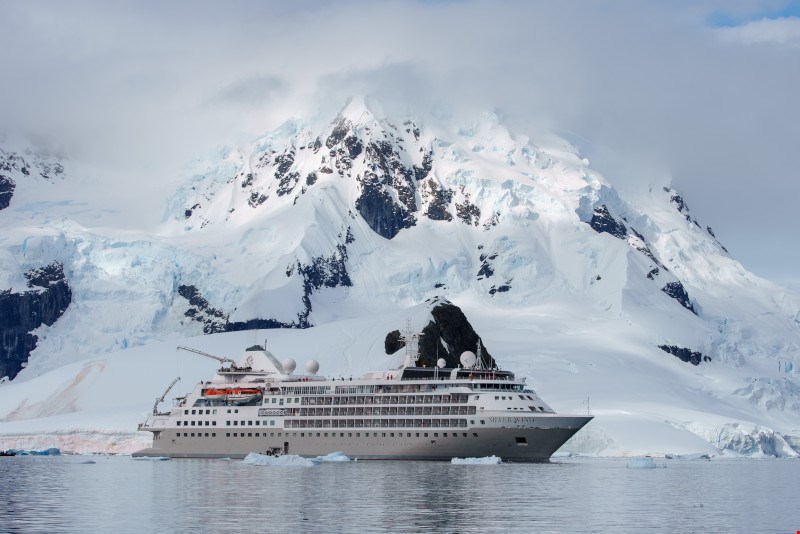
Prince Christian Sound, also known as Prins Christians Sund, is one of the most spectacular waterways in southern Greenland. Stretching for about one hundred kilometers, it separates Greenland’s mainland peninsula from Sammisoq Island and several smaller islands of the Cape Farewell Archipelago. The scenery is breathtaking: steep mountain peaks, glaciers descending into the sea, and icebergs floating on the crystal-clear waters create an image of unique Arctic beauty. Along the passage there is only one settlement, Aappilattoq, with about one hundred inhabitants, while a weather station monitors conditions for navigation. The climate is subpolar maritime, with relatively mild variations compared to other Arctic regions. Prince Christian Sound is a favorite route for cruises in Greenland, as it offers travelers the chance to witness glaciers, icebergs, and abundant wildlife such as whales, seals, and Arctic seabirds. It is a destination that reveals the raw wilderness and authenticity of the north in a way that remains unforgettable.
Evighedsfjord, Greenland
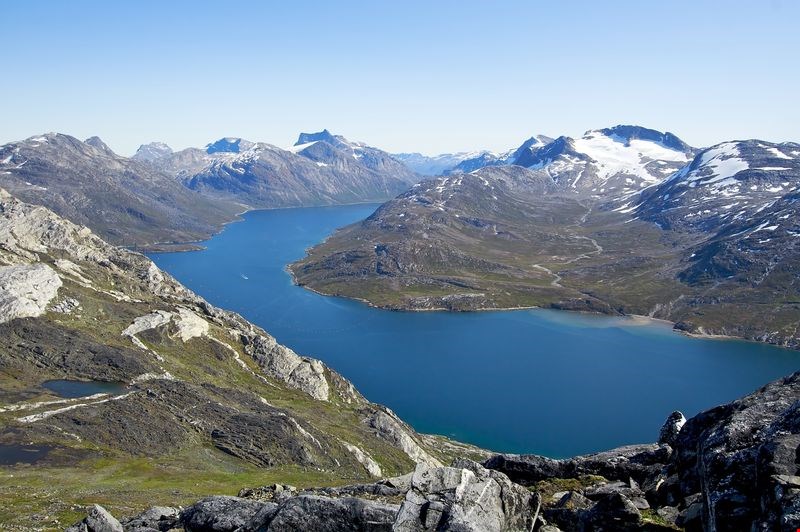
Evighedsfjord, also known as the “Fjord of Eternity,” is located in western Greenland, near the town of Maniitsoq. It is a long and narrow glacial fjord, impressive for its steep mountains and glaciers that descend all the way to the sea. The area is almost uninhabited and offers pristine Arctic nature, with clear waters, ice, and a tranquility that justifies its name. Evighedsfjord is a favorite destination for expedition cruise travelers who seek the authentic sense of isolation and the grandeur of Greenland’s landscape.
Amerloq Fjord
The Amerloq Fjord, in western Greenland, is a stunning natural formation known for its steep mountains and crystal-clear waters. Located near the town of Maniitsoq, it is a favorite destination for travelers seeking an authentic Arctic experience. The area offers excellent opportunities for kayaking, hiking, and wildlife exploration, while the serene landscape is enhanced by majestic glaciers that descend into the fjord. Amerloq embodies the raw beauty and allure of Greenland, inviting visitors to discover a pristine and grand environment.
Qaqortoq, Julianehab
Qaqortoq, formerly known as Julianehåb, is the largest town in southern Greenland and one of the island’s most vibrant centers. It lies beside a fjord and is surrounded by steep mountains, combining the rugged Arctic environment with human presence. The town is notable for its colorful wooden houses, which stand in sharp contrast to the gray rocks and white ice. It also has an active cultural life, with a museum, galleries, and a teachers’ training college. Particularly well known is the project Stone & Man, an open-air collection of sculptures carved into rocks by artists from different countries. Qaqortoq represents Greenlandic culture at its core: a small, remote community with a strong identity and a deep connection to the wild nature around it.
Hvalsey, Greenland
Hvalsey was one of the most important Norse Viking settlements in Greenland during the Middle Ages. It is located near present-day Qaqortoq, on the southwest coast, and is best known for its remarkably well-preserved medieval church, built around the 14th century from large stone blocks. The church at Hvalsey was the center of religious life for the Scandinavian settlers, and it was the site of the last recorded event of the Norse presence in Greenland—a wedding in 1408. Today, the site is a significant archaeological monument and forms part of the cultural landscape designated as a UNESCO World Heritage Site.
Ilulissat, Greenland
Ilulissat is a town in the Qaasuitsup municipality in western Greenland, located approximately 200 km north of the Arctic Circle. The glacier and fjord Ilulissat have been declared since 2004 as World Heritage Sites by UNESCO.
Maniitsoq, Greenland
Maniitsoq is a small town in western Greenland, set in a mountainous and highly scenic area along the fjords. Its name means “the place of the rugged cliffs” or “the man with clenched fists,” referring to the region’s distinctive rock formations. Often called the “city of bridges,” Maniitsoq is spread across small islands and peninsulas connected by numerous bridges. Its economy relies on fishing and the fish processing industry, while it also attracts visitors seeking authentic Greenlandic atmosphere, dramatic landscapes, and activities such as hiking and kayaking.
Nuuk, Greenland
Nuuk is the capital and largest city of Greenland. It is the seat of government, as well as the country's largest cultural and economic center. The Nuuk Tourist Office was built in 1992 to house the headquarters of the new National Tourist Board of Greenland. It was built not only to provide information to tourists but as an attraction, with a fake Christmas tree and an extremely large postal box.
Reykjavik, Iceland
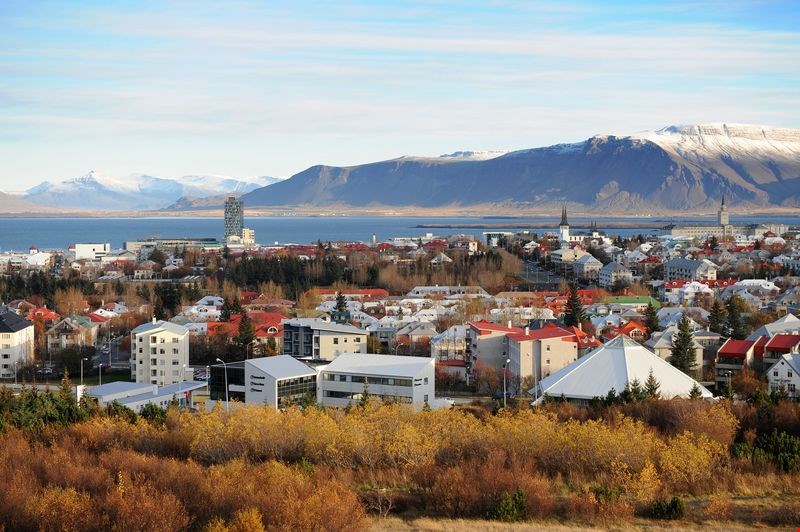
Reykjavik is a perfect town, with plenty of room, clean air, vibrant culture and beautiful environment. The southernmost capital of the world has it all. To enrich your knowledge of the Norwegian and Icelandic culture, visit the National Museum and the wooden buildings of the old city of Reykjavik. Afterwards leave the city behind and drive across landscapes of fire, ice and geysers to indulge in spas, that steam gushes.Don't miss such an ethereal experience.
Sisimiut, Greenland
Sisimiut is the second largest town in Greenland, with about 5,500 inhabitants. It lies north of the Arctic Circle and stands out for its impressive landscape of mountains and sea. It is an important center of fishing and trade, and also the starting point of the Arctic Circle Trail leading to Nuuk. The area has been inhabited for thousands of years, and today Sisimiut blends Inuit tradition with modern life.
Tassermiut Fjord, Greenland
Tassermiut Fjord is located in southern Greenland and is considered one of the country’s most spectacular natural landscapes. Stretching about seventy kilometers, it is surrounded by steep mountains rising over two thousand meters, making it an ideal setting for hiking, climbing, and exploration. The fjord is almost uninhabited, offering an authentic sense of isolation within the Arctic wilderness. Today, it mainly attracts adventure seekers and lovers of natural beauty.
Vestmannaeyjar, Iceland
Vestmannaeyjar is a town and archipelago located off the south coast of Iceland. The name "Vestmannaeyjar" means "the Westman Islands" in Icelandic, and refers to the fact that the islands were originally settled by Irish slaves or servants, whom the Norse called "west men" due to their location west of Norway. Vestmannaeyjar is also known for its natural beauty and unique geography, with rugged cliffs and volcanic formations making up much of the landscape.