Bartolome (San Salvador)
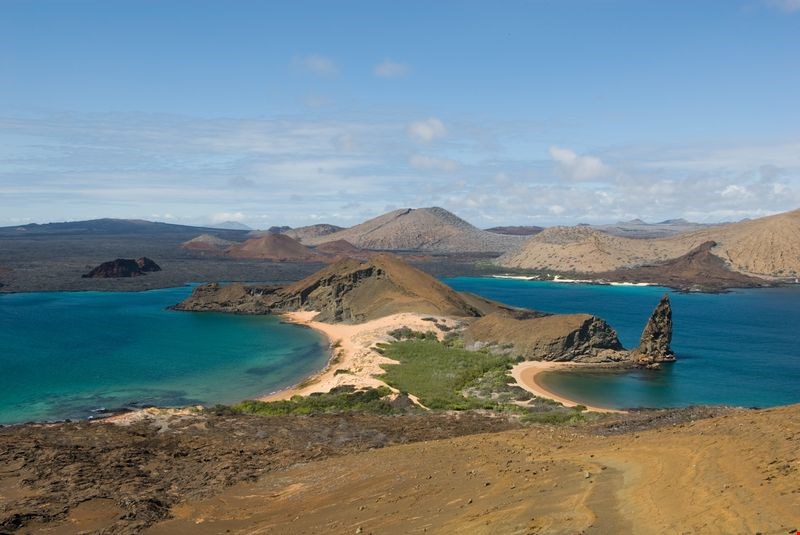
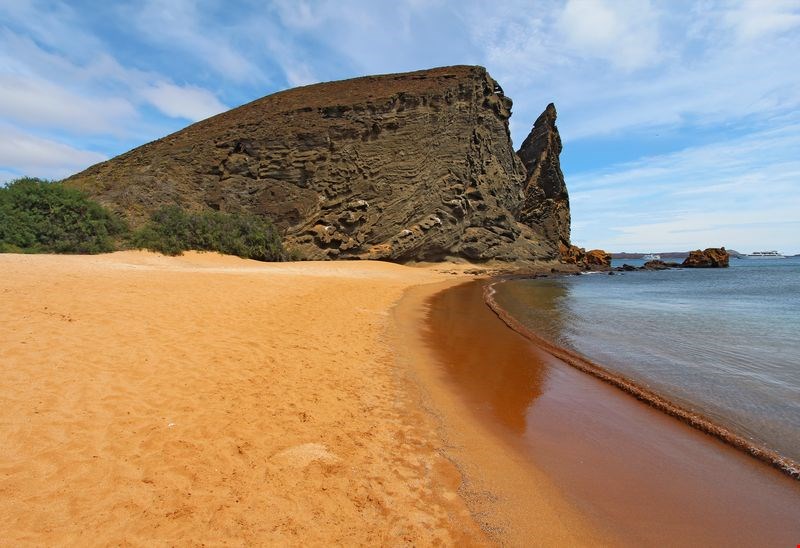
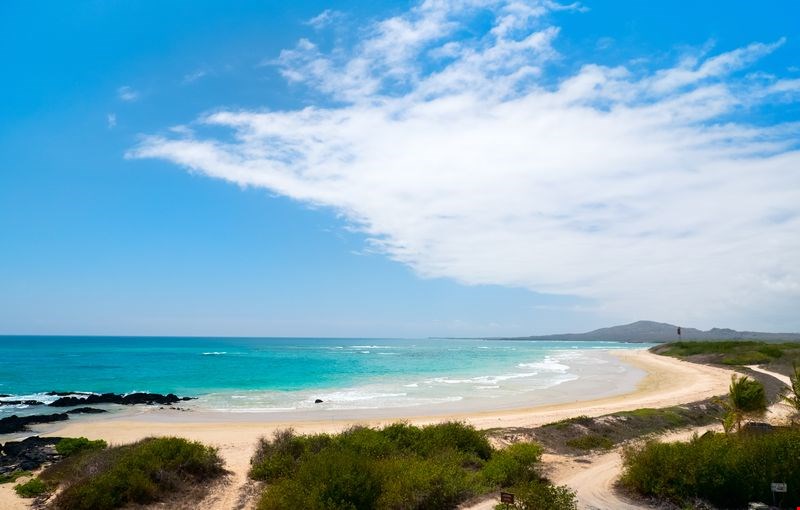
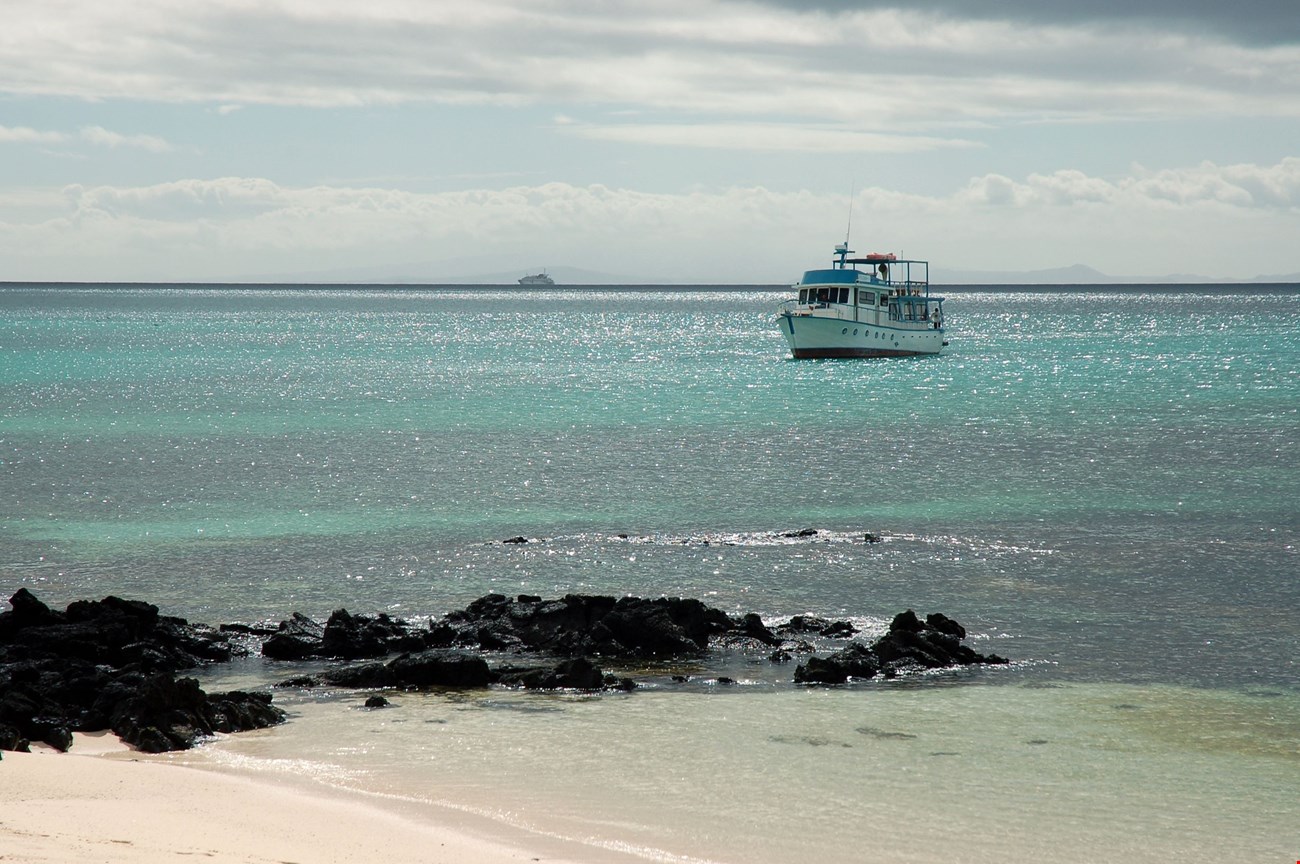
Bartolome is a small island off James that offers beautiful white sand beaches fringed by luxuriant green mangroves.A recently volcanically active island,Bartolome Island has a moon-like landscape and volcanic cones.The view from the top of Pinnacle Rock is perhaps the most famous in the Galapagos with the opportunity to see up to 28 islands if visibility allows.On the beach watch for the endemic Galapagos penguins,the only penguins in the world found north of the equator.As you walk along the white sand beach you might catch a glimpse of them swimming along side marine turtles a variety of brighty colored tropical fish and white-tipped reef sharks,while the Galapagos Hawk files overhead.Marine turtles come ashore to nest here between January and March.
Cerro Brujo, San Cristobal, Galapagos
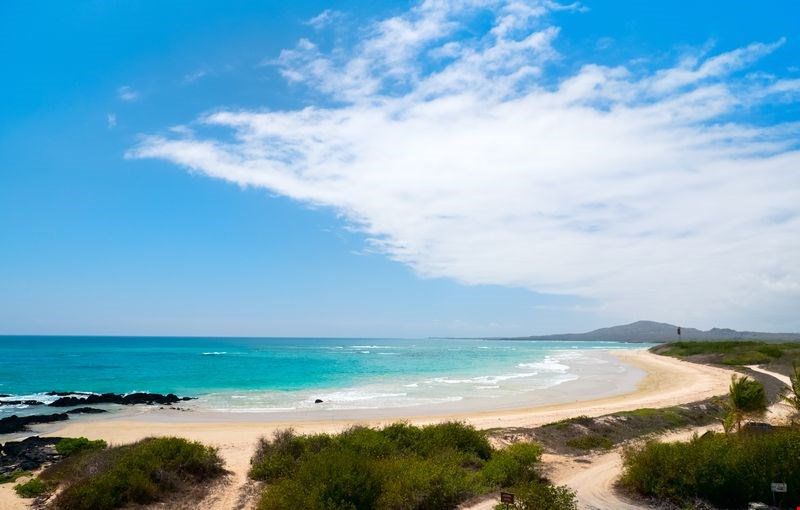
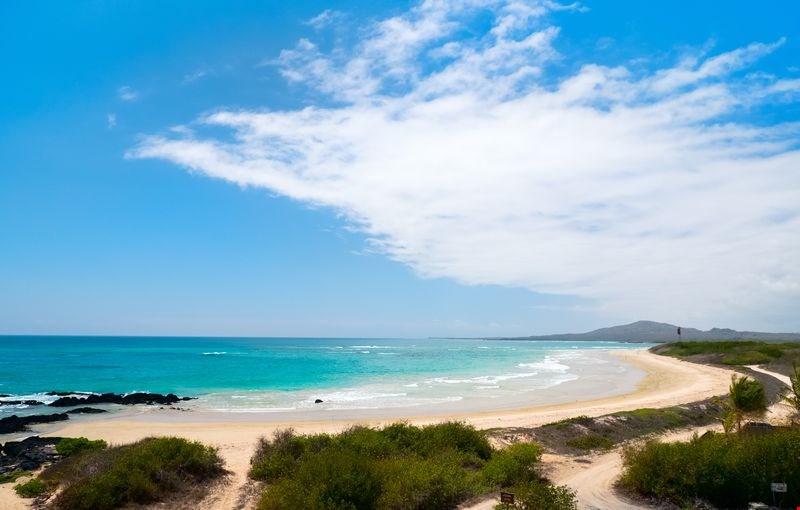
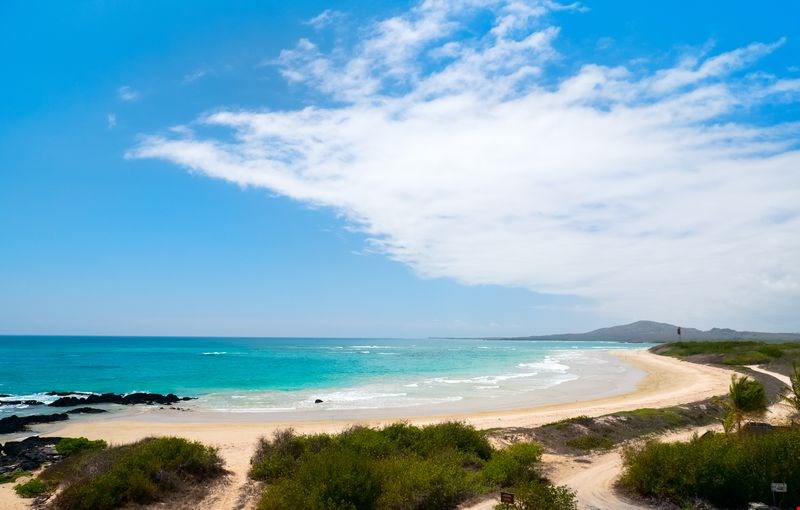
Cerro Brujo is located on the north coast of San Cristobal Island.Its main attraction is the powder like sandy beach other than species if flora and fauna.In the lagoon located at Cerro Brujo the people of Port Barquerizo Moreno mine salt for preserving cod beed and tortoise.Today it is a place for watching lake and coastal birds.Cerro Brujo offers an excellent landscape where you can see kicker Rock geological formation the southern part of Upper San Cristobal and the coast adjacent to Cerro Brujo.
Cerro Dragon (Santa Cruz), Galapagos
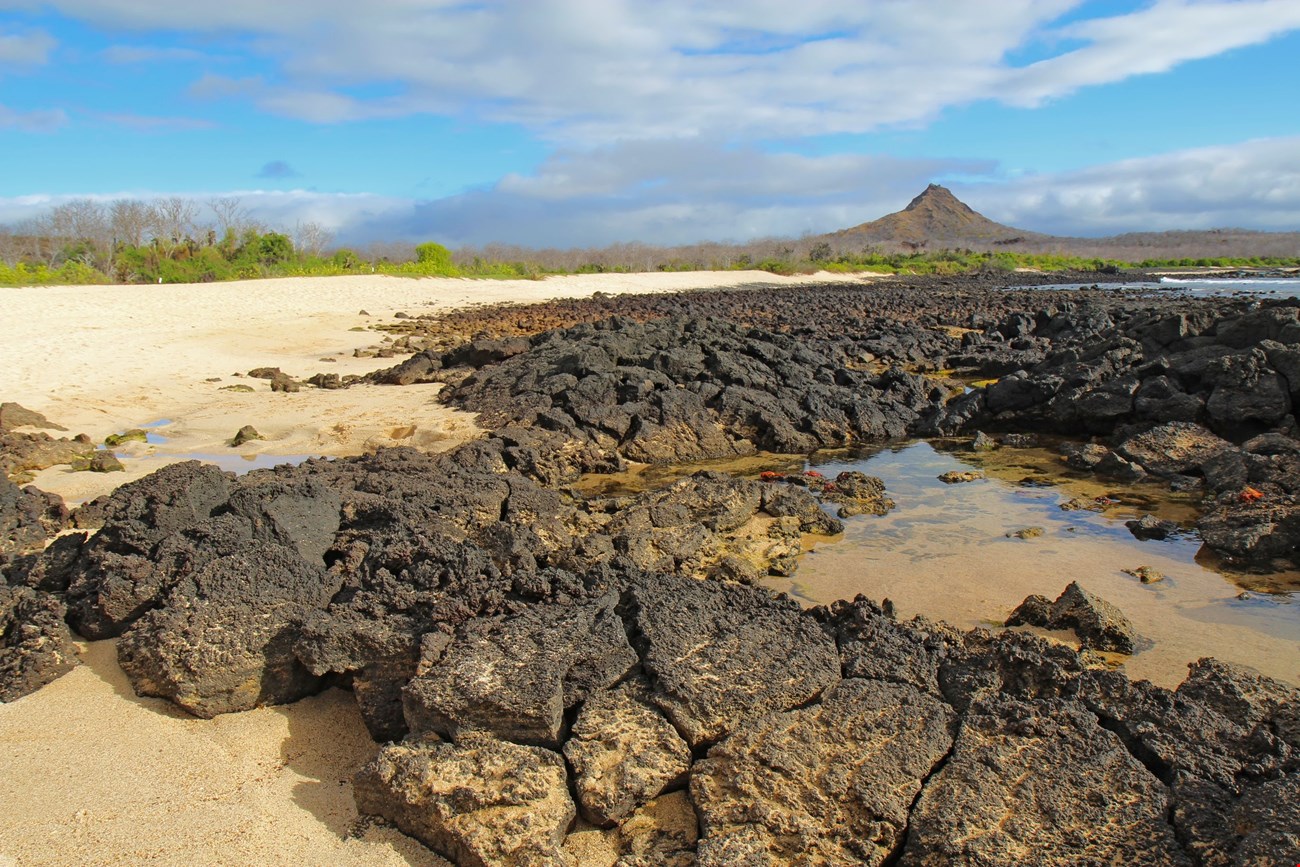
The Dragon Hill is located in northwestern Santa Cruz Island and consists of a trail that runs through three different environments at just 1600metres long.In the lagoons there are shrimps,the same as is the food of the flamingos at certain times of year they are more abundant and therefore the population of these birds is larger.During rainier times the water of the lagoons become too sweet and therefore shelfish populations decline,and shorebirds also become scarce.The beach is very rocky.At high tide it's a nice place for snorkeling.
Elizabeth Bay, Isabela island
Elizabeth Bay is located on the east coast of Isabela Island. The bay contains many islets, which can be visited by dinghy. Penguins and blue-footed boobies can be spotted on the rocky islets. With an abundance of marine life and clear water, the area is perfect for snorkeling and viewing schools of colorful fish, sea lions, and perhaps even sharks.
Tagus Cove (Isabela)
Tagus Cove is located on Isabela Island in the Galápagos and is a natural harbor that once served as an anchorage for pirates and whalers in the 18th and 19th centuries. Today it is a popular stop for visitors to the archipelago, offering views of Darwin Volcano, hiking trails with striking volcanic landscapes, and a saltwater lagoon often frequented by flamingos and other birds. Along the cove, one can also see names of ships carved into the rocks, a reminder of its rich maritime history. The area is ideal for hiking, birdwatching, and exploring the volcanic scenery.
Post Office Bay (Floreana)
Post Office Bay on Floreana Island in the Galápagos is famous for a tradition that dates back to the 18th century. Sailors and whalers once left letters in a wooden barrel, which other travelers would collect and deliver to their destinations. This informal postal system continues today, with visitors leaving postcards and taking others with them to deliver, keeping a unique historical custom alive. Beyond this distinctive tradition, the bay also stands out for its natural beauty and the rich wildlife of the Galápagos.
Punta Cormorant (Floreana)
Punta Cormorant is located on Floreana Island in the Galápagos and is known for its unique beaches and rich wildlife. On one side lies a beach with greenish sand, colored by olivine crystals, while on the other there is a white coral beach where sea turtles often come to nest. The area also features a brackish lagoon that hosts colonies of flamingos along with various seabirds. It is one of Floreana’s most distinctive sites, ideal for birdwatching and exploring unique landscapes.
Santa Cruz Highlands
The Santa Cruz Highlands are located on Santa Cruz Island, one of the largest islands in the Galápagos archipelago of Ecuador. This is a lush, elevated region that stands in contrast to the drier coastal areas of the island. Visitors will find rich vegetation, farms, volcanic formations such as Los Gemelos (two large craters), and the natural habitat where the famous giant Galápagos tortoises roam freely. It is one of the most popular destinations for visitors to Santa Cruz, as it offers a very different landscape from the “typical” island scenery—cooler climate, green expanses, and unique wildlife. The area combines natural beauty, geological interest, and ecotourism, making it a key stop for anyone who wishes to experience the remarkable biodiversity of the Galápagos.
Fausto Llerena Breeding Center, Puerto Ayora (Santa Cruz)
The Fausto Llerena Breeding Center, located in Puerto Ayora on Santa Cruz Island in the Galápagos, is one of the most important conservation and breeding facilities for giant tortoises. It was established to protect endangered species of the archipelago and has played a crucial role in their survival through breeding and reintroduction programs. Visitors can see tortoises at different stages of life, learn about the history of conservation in the Galápagos, and understand the importance of protecting this unique ecosystem. The center is named after Fausto Llerena, the caretaker who looked after the famous tortoise “Lonesome George” for decades.
Prince Philips Step's, Genovesa
The “Prince Philip’s Steps” are located on Genovesa Island in the Galápagos and are one of the archipelago’s most impressive sites. They consist of a steep staircase carved into the rock, leading from the coast up to the island’s plateau. From there, visitors can walk along trails surrounded by colonies of seabirds, such as frigatebirds, red-footed and blue-footed boobies, as well as storm petrels. The site offers unique opportunities for wildlife observation and panoramic views of the Galápagos’ volcanic landscape.
Darwin Bay
Darwin Bay is located on Genovesa Island, one of the Galápagos Islands, and is especially famous for its rich wildlife. It was formed from the collapse of a volcanic crater, creating a natural harbor with a striking white sandy beach and turquoise waters. The bay is home to colonies of seabirds, such as red-footed and blue-footed boobies, frigatebirds, and gulls, while its waters are often visited by sea lions and colorful tropical fish. It is one of the most iconic and photographed sites in the Galápagos, ideal for birdwatching and observing marine life.
Champion Islet (Floreana)
Champion Islet lies just off Floreana Island in the Galápagos, Ecuador, and is a small yet highly significant destination for nature enthusiasts. Uninhabited and strictly protected as part of the Galápagos National Park, it is renowned for its rare wildlife. The islet is most famous as the natural refuge of the “Champion finch” (Charles Darwin’s finch), a unique bird species found nowhere else in the world. Surrounding its shores, the crystal-clear waters host abundant marine life, including sea lions, dolphins, turtles, and a wide variety of fish, making it a popular spot for snorkeling and diving. Although tiny, Champion Islet stands as a living example of the Galápagos’ extraordinary biodiversity, offering visitors a rare chance to witness an ecosystem almost untouched by humans.
Punta Mangle, Fernandina
Punta Mangle is a rocky point located on the northern coast of Fernandina Island, which is one of the Galapagos Islands in the Pacific Ocean. It is known for its unique and diverse wildlife, including marine iguanas, sea lions, and a variety of seabirds such as cormorants, blue-footed boobies, and Galapagos penguins. Visitors can enjoy hiking along the lava fields and observing the unique flora and fauna in the area. Snorkeling is also a popular activity as there is a diverse underwater world to explore, including various species of fish and sea turtles.
Isla Guy Fawkes, Colombia, South America
Guy Fawkes is a small uninhabited island in the Galápagos archipelago, off the coast of Ecuador in South America. It is renowned for its exceptional marine life and is a popular spot for diving and snorkeling, with waters full of rays, sea turtles, sharks, and a wide variety of colorful fish. Although small and without permanent residents, it attracts visitors who wish to experience the wild beauty and biodiversity of the Galápagos.
Buccaneer Cove, Santiago
Buccaneer Cove is a popular destination located on the northwestern coast of Santiago Island in the Galapagos Islands. It is named after the pirates who frequented the area in the 17th and 18th centuries. The cove is known for its rugged beauty, with towering cliffs, jagged rock formations, and crystal-clear waters. Visitors can enjoy a range of water activities, such as snorkeling, swimming, kayaking, and paddleboarding, and observe the unique wildlife of the area, including sea turtles, sea lions, and a variety of fish and birds.
Bahia Bowditch, Santa Cruz
Bahia Bowditch is located on Santa Cruz Island in the Galápagos and is distinguished by its peaceful, unspoiled beauty. It is a small bay with a white sandy beach, ideal for swimming and relaxation away from the busier spots. Its clear waters attract marine iguanas, rays, and tropical fish, while the surrounding area is home to various seabirds. It is a hidden gem of Santa Cruz, offering an authentic connection with the nature of the Galápagos.
Bolivar Canal Cruising
Cruising the Bolívar Canal offers a distinctive experience in Venezuela, as this waterway serves as the passage separating Margarita Island from the mainland. The waters are generally calm, with beautiful coastal scenery, while along the route one can see fishing villages, tropical vegetation, and beaches that give travelers an authentic sense of the region. A transit through the Bolívar Canal is not only a practical maritime connection but also an opportunity to witness local life from the sea, in a destination that blends the tranquility of the landscape with the vibrancy of local culture.
Gardner Bay (Espanola)
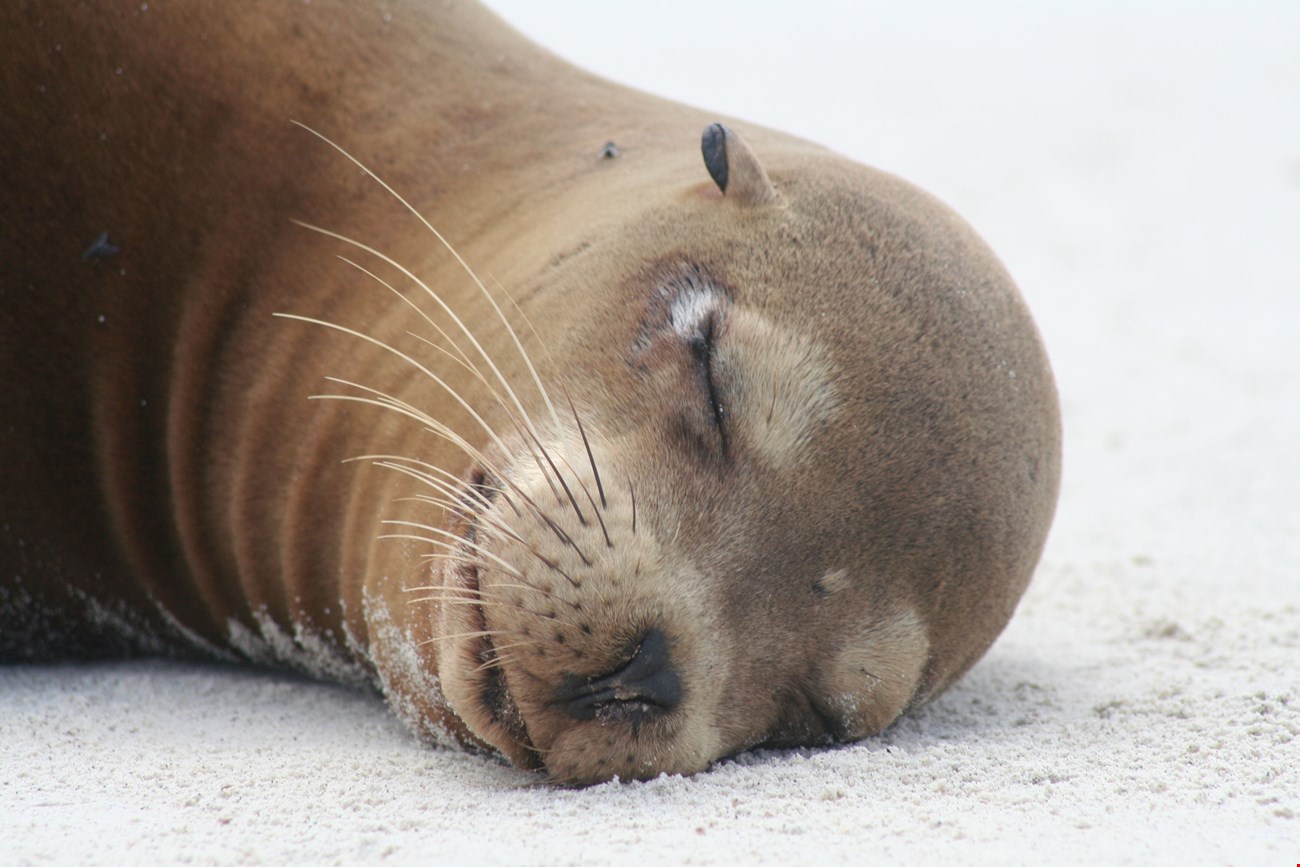
On the North coast of Espanola there is one of the longest beaches in Galapagos. They are actually two adjoining beaches with a total length of 1.300 meters. This is one of the prettiest beaches in the Galapagos stroling along the shore is quite an experience as the beache is usually packed with sea lions of all kinds babies, sleeping mothers and off and on grouching bulls trying to impress the females and other younger bulls it is also a site where a few turtls nest every year
Kicker Rock (San Cristobal)
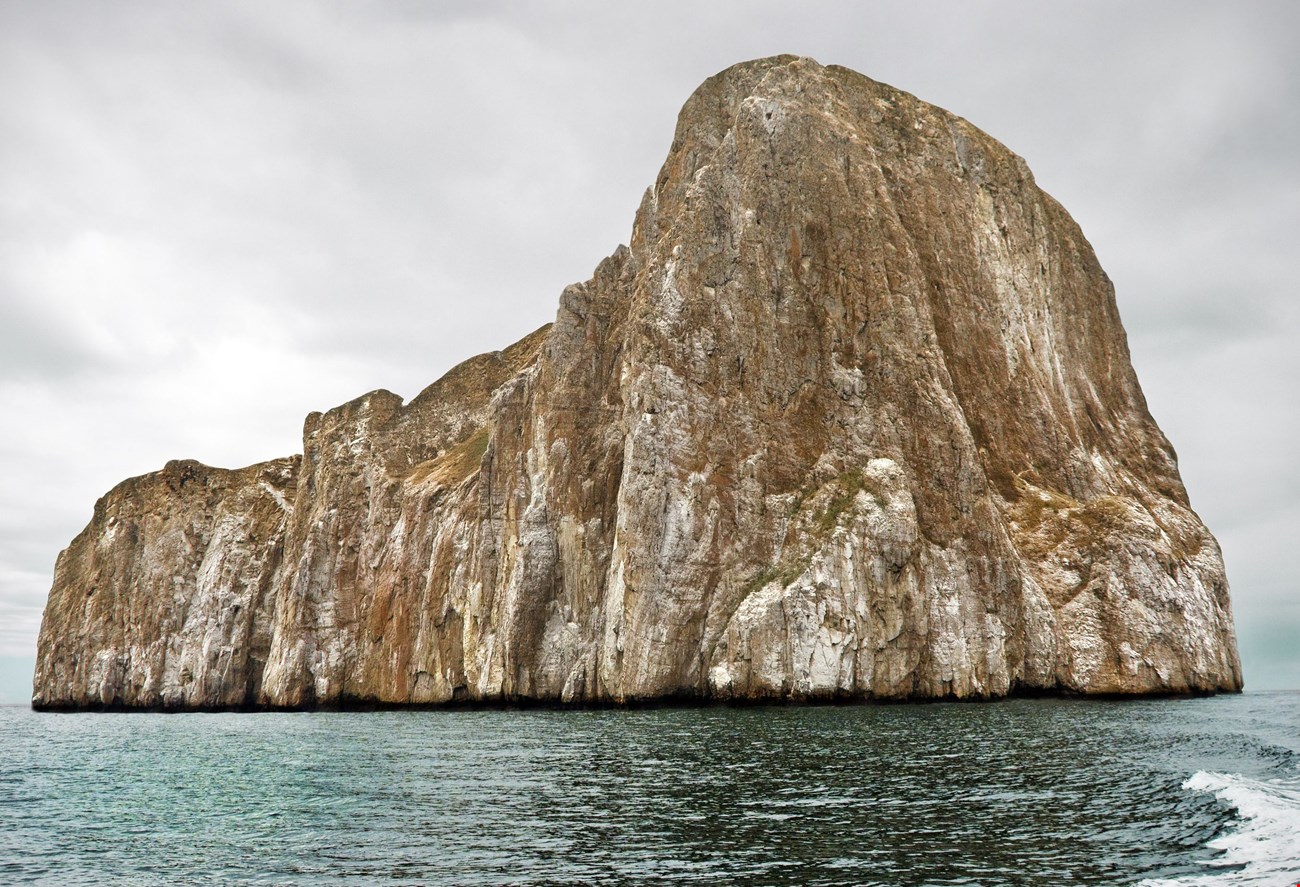
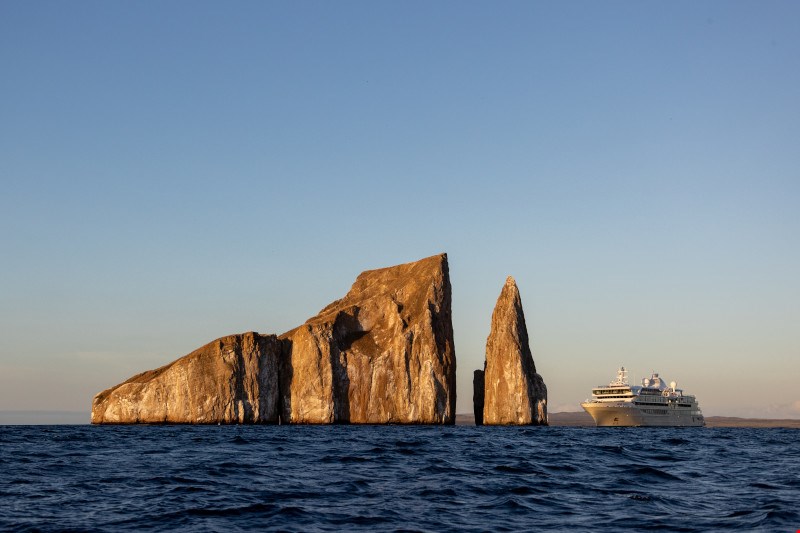
Kicker Rock, also known as “León Dormido” (the “Sleeping Lion”), is a striking rock formation off San Cristóbal Island in the Galápagos. It consists of two vertical cliffs rising about 150 meters high, separated by a narrow channel of turquoise waters. It is a popular destination for diving and snorkeling, as the area is home to hammerhead sharks, sea turtles, rays, and a wide variety of tropical fish. Kicker Rock combines impressive geological features with a unique marine ecosystem, making it one of the most iconic sites of the Galápagos.
Punta Moreno (Isabela)
This island was named in honor of Queen Isabela and it is the largest island of the Galápagos.The island's seahorse shape is the product of the merging of six large volcanoes into a single landmass.Punta Moreno is located on the western shore of Isabela Island and it is famed for their vast number of endemic species.In a dinghy drive very early in the morning,you could see huge marine iguanas, Galapagos Penguins and flightless cormorants.This lava field has also a lot of pioneer plants. Like surprise you will found in the middle of the lava field, some brackisch water pools with flamingoes.Here visitors will see small blue lagoons, blue herons, and Bahama pintail ducks.The field is also covered by mangroves where brown pelican can be seen nesting in the green leaves.Tourists will not stop admiring the magnificent panoramic view.
North Seymour, Galapagos
North Seymour is a small island in Galapagos islands. There are good nesting sites for an amazing colony of frigate birds. Here, you can admire many species of wildlife such as sea lions and marine iguanas. Beautiful, rocky coasts with clear blue waters make the place the ideal spot for diving and snorkelling. Its interesting geology create an attractive scenery and the visitors have the opportunity to explore a natural wonderland.
Punta Espinoza (Fernandina)
Punta Espinoza is a narrow stretch of land in Fernandina Island, where hundreds of marine iguanas gather in large groups on black lava rocks. The famous Flightless Cormorant inhabits this island, as well as galapagos penguins, pelicans, galapagos land iguanas, rice rats, and sea lions. Mangrove forests also abound on the island.
Punta Suarez, Espagnola
Espanola Island is a popular tourist destination in Galapagos islands. Punta Suarez is a picturesque spot in this area famous for its wildlife. Sea lions, large iguanas and numerous species of birds are possible to be seen here. It is, also, the only place in the world that albatross nest. It has scenic white sandy beaches so it is a nice opportunity for diving and snorkelling activities. The rocky volcanic surroundings make the scenery unique and perfect for photographs!
San Cristobal, Ecuador
San Cristobal is the easternmost island in the Galápagos archipelago, and one of the oldest geologically. Its name comes from the patron saint of seafarers, St. Christopher. "Kicker Rock" is a worth-visiting area that represents the remains of a lava cone. It is a magnificent island in the middle of the sea. For those who adore sea activities,the island offers an amazing snorkelling and diving experience. The sea life you see there is unbelievable! You will have the chance to experience swimming with sharks, turtles, dolphins and rays.
Sullivan Bay (Santiago), Galapagos
Sullivan Bay is located in the Galápagos Islands, next to Santiago Island. It is best known for its vast lava fields formed by 19th-century volcanic eruptions, which remain almost untouched today, creating a landscape that looks almost lunar. Although vegetation is sparse, the area hosts unique wildlife such as lava lizards, blue-footed boobies, and marine iguanas. The bay is also popular for swimming and snorkeling, with its waters home to colorful fish and sea turtles.
Punta Vicente Roca, Isabela
Isabela is the largest island of the Galapagos islands and Punta Vicente Roca is large,magnificent bay with amazing sea life. The whole place is a result of a volcanic eruption and that makes the scenery just beautiful. You will be amazed by the rare sea creatures that live here. Penguins, sea lions, sea turtles, cormorants and rare species of fish are very common here. The crystal blue waters are ideal for water sports such as scuba diving and snorkelling! It is certainly a paradise on earth and a nice chance to watch and get in touch with this special sea nature!